Showing posts with label Byzantium. Show all posts

Friday, October 18, 2019

A Little Experiment

I'm a member of BSFW, one of the best damned spec-fic writers groups anywhere. I've been providing some content for their Twitter feed, and maybe, just maybe, it might be useful to you blog readers. Let's read, shall we?

Today, a writing tip about finding material to inspire you: Don't get locked into the familiar.

1. For instance, if you live in North America or the British Commonwealth, see what's happening elsewhere. Not just events and histories, but what people are writing.


2. Reexamine things you thought were "dead ends." If you look closer, they might inspire you. For decades, historians wrote off the Byzantine Empire because they thought its influence simply stopped at the Ottoman takeover. Now, they're reevaluating it, and it's a fascinating source of material for writers.

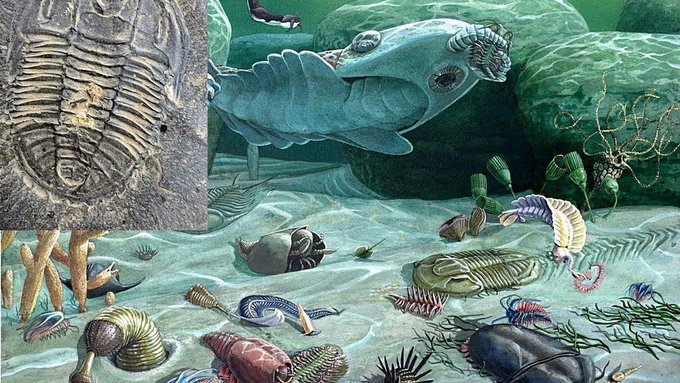
Hell, even the Burgess Shale might give you something... https://smithsonianmag.com/history/burgess-shales-weird-wonders-36404411/…


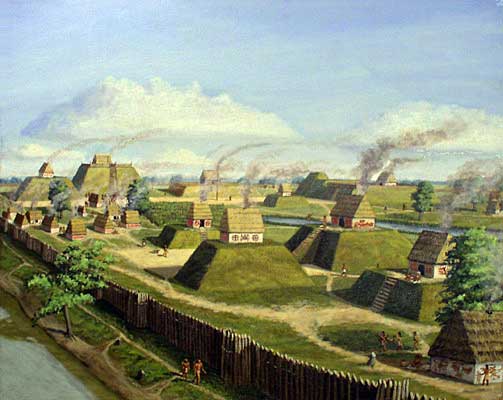
3. In archaeology, absence of evidence isn't evidence of absence. Not every civilization builds in stone and iron. Look past the civilizations you can see to the ones you can't.

https://en.wikipedia.org/wiki/Mound_Builders…


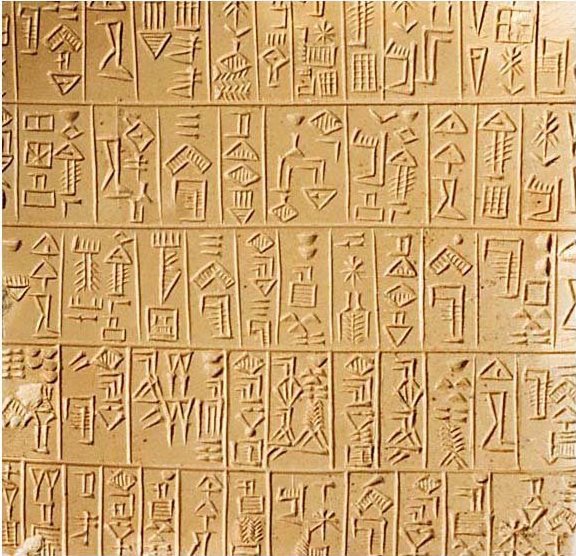
4. Be aware of the gaps in our knowledge. We've been Homo Sapiens for more than 200,000 years; but our written history begins only 5,000 years ago. What happened before?  https://en.wikipedia.org/wiki/History

If you're feeling uninspired, look where you didn't look before.

Friday, March 29, 2019

Thank You for Your Patience. Let's Talk Rome.

Hey, gang, sorry it's been a while. But life, right?  I've been rewriting the second novel, working on a sequel to TWS, working on a couple of short stories, not to mention life stuff with which I shall not bore you...I know, excuses, excuses.
So...I'm still not completely up to speed, but I've got some fun facts about Rome. Rome's cool, right? So let's TIL Rome.

The Roman legionary camp was essentially a city that they carried with them and then built wherever they needed it. The  plan was unvarying and included a market square, a space for sacrifices, and a giant surrounding wall. Every soldier knew where he bunked in that camp - even when the camp didn't yet exist. It was a model in their minds.

Also, five hundred years after the fall of the Western Empire, and even though their daily language and culture were medieval Greek, the Byzantines referred to themselves as Romans. So did the Muslim world.

Today "All roads lead to Rome" means a lot of different routes can lead to the same place. Originally it wasn't a proverb; it was the literal truth. The Romans were the best road builders the Western world have ever seen to that point, and all their roads - even those as far away as Britain and Turkey - were measured from the "Golden Milestone" set up in Rome's main market. A Roman road was basically a well-built stone wall buried dozens of feet in the earth so travelers could walk on top of it. They're still around.


Judas may have been called Iscariot because he carried a sica, a curved short sword that was considered dishonorable by Romans. Because it was light, concealable, and made it easy to carve an unarmored opponent, it was considered the weapon of assassins, cutthroats, and domestic terrorists. Iscariot = knifeman. And these days, sicario still has that meaning, kind of.

There.
Those are things you know now.
Welcome back!

Tuesday, November 20, 2012

That Bastard, Conrad of Montferrat

In my research for TWS Book 2, Hero's Army, I keep coming up against this guy Conrad. The crazy thing is, he's actually dead by the time my protagonist Henry arrives in the Holy Land (or, as the Crusaders call it, l'Outremer - the overseas). But he's a really, really interesting case of tainted history.

See, if you read the old chestnuts of English historical fiction like Walter Scott, Conrad's always the baddie. Conniving, evil, wizened, ugly, sadistic, sexually... ahem... experimental... really, they can't find enough nasty things to say about the guy. But if you actually look at the events of his life, you run into some cognitive dissonance.

First of all, he's a hottie. The Byzantine chronicler Niketas Choniates described him as "of beautiful appearance, comely in life's springtime, exceptional and peerless in manly courage and intelligence, and in the flower of his body's strength." (Heck, I'm a straight male, and even I feel a little tingly.)


Friday, October 5, 2012

Today's word is STYLITES

Can you say "stylites"?
Or, to be more explicit, saint-on-a-pole.
Very popular in the Byzantine Empire around the EMA (early Middle Ages).
Apparently, Indian fakirs aren't the only holy folk who feel the need to mortify the flesh, but it's an impulse that is utterly alien to me. Why would God desire self-inflicted pain from his creatures? How do you get so deep into your own belief system that this sounds like a good idea?

I don't mean to offend any rockin' stylites out there. I'm just asking.

Wednesday, June 20, 2012

"It's Easy," I Said...

"...whenever the story starts to drag, just torture your hero."

I was having lunch with a ghostwriter friend of mine, chatting a little about TWS Book 2, Hero's Army. (Which you should totally buy as soon as it's ready. In fact, why wait? Pre-order it now! I promise, in Book Two Henry **SPOILER ALERT**  actually makes it to Constantinople! It just makes things worse, of course.)

Anyway, she asked me how HA was going, and that's when I made my semi-fatuous little genre writer comment.

But as soon as I said it, I knew it wasn't true.

Wednesday, March 28, 2012

The Great City

One of the neat things about living where I do is the absolutely insane wealth of antiquities you can find in the museums. If you're dabbling with Byzantium and the Ayyubids - as I am in Hero's Army - you can just walk into the BGAM - Big Giant Art Museum - and boom! There's an exhibit on the Kingdom of the Greeks (that's what the Franks called Byzantium) and the Saracens (the Moslem states, from the Umayyads to the Abbasids.) If you've been researching entirely from books and the Internet, it's an almost physical shock to see actual, tangible objects from that time.

In fact, the more you look, the more you realize that nothing appears exactly as you imagined. Take the coins. You know, intellectually, that gold was even more valuable then than it is today; still, you have this image of pirate-sized gold coins as big as your palm and thick as a slice of cheese. Then you get to the BGAM and actually see Byzantine solidi: Each one is 24-karat gold, able to buy a month's unskilled labor - and no larger or thicker than a thumbnail.

Or the architecture. You hear "Greek" and you instantly imagine white marble, but that's hooey. The reality is that there was lots of painting going on - in eye-watering color schemes. Not to mention silk hangings in twisty patterns of brick red, leaf green, and blue and gold - the disco polyester of the Middle Ages, enough to make the Ayyubids on the other side of the border look positively restrained in their decor. If the black-velvet Elvis painting had existed a thousand years ago, it would have been worth its weight in solidi.


But for some reason, it's the more humble stuff - the carved wood and bone, the potsherds (ostraka) - that really convey just how distant it all is in time. With wood and clay, it's easier to imagine the hands of the men who shaped it.