
Sunday, March 9, 2025
Viva el Presidente!

Tuesday, March 4, 2025
Rant! (Une hommage du M. Ellison)
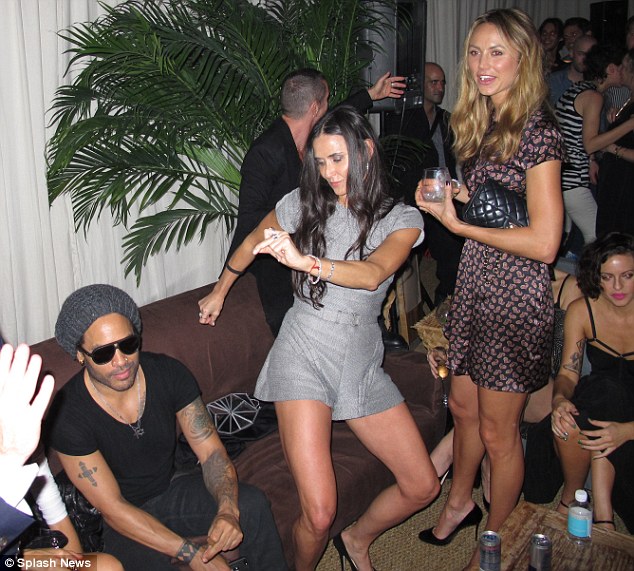
You're at a party. The hors d'oeuvres are tasty, the drinks are strong, the people are pretty. You're talking to this one guest and you find out she's a doctor. So you roll up your pants leg and ask her about your rash.
Kidding!
Of course you don't do that.
Because you're cool.
You also don't ask the attorney how to sue your neighbor and his yapping dog, or the teacher if that was really his first job choice. It's basic etiquette; and for the most part, I'm glad to say I travel in circles where it's understood. Alas, if you (like me) publish a blog, are signed up to a dating site, or are introduced around as a writer, you will occasionally encounter people who just don't get it. For the benefit of those people - and anyone who interacts socially with professional writers - here are some things you don't say to a writer.
1. I might steal that line. I get paid to write good lines, most recently by the president of a prestigious university that shall remain nameless. So the fact that you like my line enough to repeat it, take credit for its wit, and pay me nothing is not a compliment. Your good opinion isn't worth $400 an hour, internet stranger.
Sunday, November 24, 2024
Thanksgiving Advice for a Moist, Flavorful Turkey
" Cheesecloth."

You're welcome.
[Okay, okay - once the turkey has finished cooking, soak the cheesecloth in the drippings and drape it over the bird until you're ready to carve and serve. It really works.]
Wednesday, October 30, 2024
Every Book Is a Conversation

Every book is a conversation between the author and the society in which the book was written, even when the book is science fiction or fantasy. That's why there are now generational divides in fandom. It was inevitable. if a genre lasts long enough, "classics" fade and are replaced.
The divides have been more bitter because society has changed so much in the last sixty years in terms of morality and technology, especially. Liking certain books is now unacceptable because the authors are unacceptable.
I'm an old fart. I read new things and try to stay current. But a lot of the time it feels more like eating my vegetables than the thrill of consumption I felt when I first began my SFF journey.
That said, I've read four books in the last few years that broke through the ennui:
Gideon the Ninth (Tamsyn Muir)
The Fifth Season (NK Jemisin)
Three Parts Dead (Max Gladstone)
Zoo City (Lauren Beukes)
I didn't love all of them unconditionally, but all of them felt radically new, fundamentally strange and self-consistent. Worth reading.(Now that I think about it, all of them are fantasy...or at least they posit physical systems that are inconsistent with current thinking about physics and human biology.)
I didn't love all of them unconditionally, but all of them felt radically new, fundamentally strange and self-consistent. Worth reading.(Now that I think about it, all of them are fantasy...or at least they posit physical systems that are inconsistent with current thinking about physics and human biology.)
But finding them, and reading them, was like going to a party full of strangers half my age and chatting to them one by one until I found the handful that were simpatico enough to make for an interesting evening.
It took work, y'all. I had to work to have fun. Because the authors that fed my soul when I was a kid were having a conversation closer to me in time; and because (maybe) I had more energy, more curiosity, and fewer defenses as a reader. I have to be intentional about my pleasure reading now - researching books and writers beforehand, looking through award lists, soliciting recommendations.
Walking is harder for me than it used to be. Getting a solid eight hours of sleep is a vanished dream. More and more days go by in a gray haze of semi-alertness, matched by a pallid six hours of nighttime exhaustion. And now even reading books for pleasure is more difficult.
Aging isn't for the weak, kids.
Just letting you know upfront.
Wednesday, December 15, 2021
The Big Day

If you don't want to subscribe, you can find it at newsstands and Barnes & Noble. Waiting for that flight home for the holidays? Nip into Hudson News and get your mind expanded. Doing some gift shopping at B&N? Don't forget to gift yourself.
And now that the shilling is out of the way, next week we'll have an interesting post or two...
Friday, October 8, 2021
NEWS! NEWS!
 If I haven't told you already: My short story, Charioteer, will be published in Analog next year - the Jan/Feb 2022 issue. You'll find it at Barnes & Noble, any good newsstand, or digitally.
Tuesday, October 5, 2021
Super-Important Thoughts About Foundation So Far

That's not necessarily a bad thing. The original trilogy is clunky. Most of it is characters plotting at one another in rooms of different sizes: Courtrooms, boardrooms, groundcars, abandoned factories, starship cockpits, hotel rooms, apartments. It's often hard to conjure up an image of what's happening, because Asimov provides so little descriptive detail. Until Foundation and Empire, its characters are mostly default white guys. Asimov's prose is workmanlike, but nothing exceptional (although he does have a gift for the occasional character detail - the "pudgy hands" of a man feigning murderous outrage, for instance).
So why is the trilogy considered a masterpiece?
1. It starts with a grand idea, and sticks with it. For the first one and a half novels, everything is about how Seldon's Plan works out its psychohistorical necessity. In the second half, everything is about restoring the plan after it's fractured by a literally unforeseeable event.
2. It works beautifully in terms of the nuts and bolts of craft. There are no idle characters or story elements in these books: Every character has a purpose, and they work ruthlessly toward it without hesitating or whining or pondering their place in the cosmos. If you're looking for stories that drive forward like clockwork, Foundation is your SF go-to.
3. It conveys a sense of historical time. Better, it has the audacity to try to convey a sense of historical time.
So far, AppleTV's Foundation is none of this.
Positives: When it comes to lush physicality, Asimov was lacking, but the TV series is not. In fact, the opening episodes are the most gorgeous SF I've seen on TV in...maybe ever. The decadence of the Empire is laid out on the screen in saturated red, blue, and black with glittering gold and silver highlights. Architecture overwhelms people. Every space, every costume, is crammed with detail. It has grandeur. Also, the people of the Empire are all the colors of the rainbow, and not uniformly male.There are some interesting ideas that could have been the bases of their own series [like the "genetic dynasty" of the Cleons].
BUT...
The TV series seems to have abandoned the fundamental rules of psychohistory...and those are the core of the trilogy. Real quickly, here they are:
1. Psychohistory can predict the future, but only the futures of large groups, like nations, empires, planets, or galaxies. The larger the group, the more accurate the prediction.
2. Psychohistorical predictions don't work if those groups are aware of the laws of psychohistory or the predictions themselves.
3. As a corollary of #1, the actions of individuals almost never have much impact on major events. The best they can do is facilitate matters that are already inevitable.
Anyone who has tried to write a story can see the trouble with these laws when it comes to narrative: If a character's actions don't matter in the grand scheme, why should a reader care? Asimov finessed the problem with stories in which the protagonists had foreground goals, while larger events took place in the background; with stories in which the characters' actions were full of derring-do but proved fruitless; with stories in which the characters take decisive action while fretting about the consequences of knowing too much about the future; with stories...well, you get the idea. He was brilliant at squaring the circle, and that's part of the fun of the trilogy.
The TV writers are less audacious, less interested in the idea, and more driven by Hollywood tropes that have been used a lot. In the TV version, psychohistory has devolved from a mathematical tool to an oracular power, a magical way of predicting the future. There is still lip service paid to the idea of math, but characters "see" the future basically by staring into a cloud of light motes which is meant to represent a mathematical display. [In the books, this "Prime Radiant" is just a convenient way of portraying complex formulae, the 20th century foreshadowing of a PowerPoint deck; on the TV show, it's portrayed as a semi-magical scrying device that can only rarely be activated except by those who are worthy.] At one point one character activates the display and asks her daughter if she can understand it. The daughter says "no," but this should never have even been a question: At least in theory, anyone with sufficient mathematical training should be able to figure it out, and no one without training should be able to. It's math, not magic; you shouldn't have to be a Chosen One to make it work...but you can see the Chosen One trope tugging at the writers' subconscious all the time.

The series has not veered irreparably away from the Seldon Plan yet. But the primary indices don't look great.
Monday, October 4, 2021
Sunday, October 3, 2021
The Wider World of Historical Fiction

What do we want when we read fantasy? For a lot of readers, it's the chance to identify with powerful characters. Wizards, warriors, angels, aristocrats, vampires, demigods, one of the most popular tropes in fantasy is the powerful figure with a deadly flaw. We love characters who may have something to fear, but who are nevertheless able to influence the world around them in ways that are often impossible for us.
For others, fantasy is comfort reading. They want the tropes they grew up with, familiar settings and characters: school stories, noble elves, adventurers in a dungeon.
But there's another, more interesting urge: The desire for a wider world, a bigger, stranger place than our familiar neighborhood. The chance to explore. Places that are weird but make sense, that have stories to tell other than the ones we've heard. You can fill that urge with good historical fiction. Sometimes, in fact, it fulfills that need better than fantasy.
Consider the opening lines of Mary Renault's novel The Last of the Wine: When I was a young boy, if I was sick or in trouble, or had been beaten at school, I used to remember that on the day I was born my father had wanted to kill me. You will say there is nothing out of the way in this. Yet I daresay it is less common than you might suppose...
"Yet I daresay it is less common than you might suppose." Did that grab your attention? It's not there just for shock value. It's a fair representation of an attitude common to an entire society. Renault goes on to build out that society, a genuinely civilized world with values profoundly different from our own - the world of Classical Athens, at the height of the Peloponnesian War.
In the next chapter, the protagonist Alexias has a religious experience while standing in the temple of Athena Parthenos, the Parthenon, and looking out over his city. Renault describes in gorgeous, goose-pimple prose a moment of worship that no Christian or Muslim would ever have; an experience that is completely pagan, but no less valid for that.
Harlan Ellison once said, "Reading is about drinking strange wine" - finding the stuff that challenges you, that is alien to your experience, that opens your eyes. I write fantasy and science fiction, but I'm telling you, you don't have to read SFF to drink strange wine.
Thursday, November 26, 2020
Here's a Thanksgifting. You're Welcome!
First published in 1970, The Eye of Argon may be the worst fantasy novella ever written. For decades, reading it out loud was a convention ritual across the United States - a ritual so cherished, there are even rules for it. It is what Dino de Laurentiis would have used to make barbarian movies if Conan hadn't been available.
Read, and enjoy, and never say I don't get you anything...

Tuesday, November 24, 2020
Thanksgiving

Meanwhile, 250 miles to the south, New Amsterdam was already a going concern and they could have landed there, prepared, and headed north...but nooooo, the Dutch weren't pure enough for the Pilgrims. Neither were the English. Neither was anyone, really. So half of them died in the first year, and they created a government so restrictive it forced people to pilgrimage away from that community and invent stuffies and coffee milk.
However, there's no reason in the world not to have a holiday just dedicated to being thankful and hanging out with friends and family. That's a pretty darned good holiday, in my opinion. So that's my Thanksgiving, and it can be yours, too.
Also, after you've cooked the turkey, dip a cheesecloth into the drippings and drape it over the bird while it stays warm in the oven. Keeps it moist.
Friday, November 6, 2020
Election Thoughts on Friday, November 6, 2020

He is one of those "I will still be your friend whether you vote for Trump or Biden" people. But I haven't spoken to him since December 2015...because, well, don't do me any favors, buddy. When you say that, you imply that Biden and Trump are both just politicians. That they're equal somehow.
But they're not. Biden is a politician. Trump is a grifter, a liar, a rapist, and a sociopath. None of that is my opinion; all of it is fact, either admitted by Trump himself, proven in a court of law, or widely diagnosed by America's medical community.
So I will not accept that "difference of opinion" trivializing okey-doke. And once more, I go to Lord of Light:
"So they play that on their fascist banjos, eh?"
"You choose the wrong adjective."
"You've already used up all the others."
"It appears that our minds will never meet on this subject."
"If someone asks you why you're oppressing a world and you reply with a lot of poetic crap, no. I guess there can't be a meeting of minds."
Wednesday, November 4, 2020
Election Thoughts on Wednesday, November 3, 2020
Whenever an important outcome is unclear, I'm reminded of Roger Zelazny's Lord of Light. On a theocratic colony world, a revolutionary named Sam has taken on the identity of the Buddha Siddhartha to oppose the rulers who have styled themselves on the Hindu pantheon. At one point there is a battle that seems to be a climactic defeat...but it ends with this passage:
"The Buddha has gone to nirvana," said Brahma. "Preach it in the Temples! Sing it in the streets! Glorious was his passing! He has reformed the old religion, and we are now better than ever before! Let all who think otherwise remember Keenset!"
This thing was done also.
But they never found Lord Kubera.
The demons were free.
Nirriti was strong.
And elsewhere in the world there were those who remembered bifocal glassees and toilets that flushed, petroleum chemistry and internal combustion engines, and the day the sun had hidden its face from the justice of Heaven.
Vishnu was heard to say that the wilderness had come into the City at last.
As Berra, the great yogi, once said - "It ain't over till it's over."
Friday, September 11, 2020
September 11 [CW: Language, imagery]

For most people 9/11 is a disaster. But for some people, it's porn. I don't mean they're fapping to falling bodies. I mean it's an opportunity for them to get weepy or to get angry without any personal loss. It's as real to them as John Wick's dog or Inigo Montoya's father - no more, no less. And politicians use it for their personal gain.
I remember when the 9/11 anti-terror funding bill was pushed through to give the states money to protect themselves against terrorism...BECAUSE EVERY STATE GOT AN EQUAL SHARE. Wyoming, population 492,976, got the same amount of money as New York - the center of the tragedy, with a population of 19 million and more high-profile terrorist targets than any other state in the union.
I remember the same politicians, who wept crocodile tears about the tragedy of 9/11 at every hoedown and country fair, fighting tooth and nail, year after year, against the reauthorizations of the Zadroga Bill - which mandates lifesaving money for the healthcare of the 9/11 responders who suffered permanent, chronic damage from smoke inhalation, injury, and exposure to toxic chemicals in the poisonous smoke of the towers. [In case you're curious, here are three of them: Mitch McConnell, Rand Paul, and Ted Cruz.]
And I remember those politicians using it as an excuse to invade two countries that had nothing to do with 9/11. [George W. Bush, Dick Cheney, Ari Fleischer, David Frum, Karl Rove.]
Now I'm watching the GOP mouth platitudes about 9/11 again, and I have to ask - which of them will actually do something about what's happening right now - something that has already killed sixty times as many Americans as al-Qaeda? Because they have done nothing...
...except try to distract us.
Monday, September 7, 2020
Research for "Hero's Army," the Sequel to "The Wrong Sword"

Right now, I'm at a scene in which my protagonist, Henry the Rat, is about to enter the city that everyone covets but him - Jerusalem.
This is Jerusalem at a very specific time in history. It's 1191, the tail end of the Third Crusade, in which Saladin, sultan of Syria and Egypt, faced against Richard I, King of England. Saladin had wrested Jerusalem from Crusader control four years before and captured, exiled, or ransomed the entire Latin-speaking Christian population [as opposed to Greek Christians - Byzantines and others - who were allowed to remain]. It should be noted that when he allowed the Crusaders/Franks/Latins to surrender, Saladin was being considerably more merciful than the Crusaders had been 88 years before, when they had massacred Moslems and Jews until the "streets were knee-high in blood."
The big problem for a writer is that the histories of the time - at least, those available in English - are good when it comes to politics, armies, and trade, but less so when it comes to descriptions of daily life. You want to be able to describe the sights, the smells, the sounds. What people are wearing, how they're talking, what they're eating. How the streets are built, how the houses are constructed and why.
Basic histories tell you none of this. So you go looking for telling details - bits you can use to suggest a bigger picture - in primary sources: documents and artifacts created at the time.
Which is to say I found two tonight. YAY!

1. The Travels of Benjamin of Tudela - tbh, I already knew about this, but I'd forgotten it. Benjamin was an Andalusian Jew who kept a journal of his travels across the Mediterranean and in the Levant. Full of little tidbits, like the story of two workmen who accidentally uncover the tomb of King David, which reads like the Tale of Aladdin.

2. The Metropolitan Museum of Art's exhibition "Jerusalem 1000 to 1400: Every People Under Heaven." Because, you know, ARTIFACTS.
Friday, May 1, 2020
Writing for Television
A few years back, Creative Screenwriting magazine had a column called Know Your Show. It was targeted to TV writers trying to "spec" [write unsolicited screenplays for] different TV series. Spec scripts are a way to showcase your work for agents and showrunners.
One of the most important rules for specs is to know the story rules that govern the show you've chosen. Know Your Show was designed to make those implicit rules explicit, breaking down the requirements for different shows by talking to the showrunners themselves. It was a great column. Here's one I wrote for it.
One of the most important rules for specs is to know the story rules that govern the show you've chosen. Know Your Show was designed to make those implicit rules explicit, breaking down the requirements for different shows by talking to the showrunners themselves. It was a great column. Here's one I wrote for it.
KNOW YOUR SHOW:
Spec for TV long enough, and someone will tell you to "fill the gap." If you've written two killer procedurals, that means write a Gossip Girl or 90210. If your portfolio bulges with twisted but critically praised fare like Dexter, then try a Psych. With that in mind, we've chosen to examine two popular shows that differ from each other in virtually every way: True Blood, HBO's vampire serial; and Burn Notice, the action-oriented spy procedural on USA Network.
True Blood offers a Deep Southern look at issues like drugs, sex, dysfunctional families...and vampires. It's a good way to showcase your (melo)dramatic chops. Burn Notice is a tightly plotted, high-testosterone action series with a lighter feel. It emphasizes con games, plot twists and authenticity in its covert-ops sequences.
Both shows are internationally distributed, with a deeply loyal fan base. True Blood has received several WGA, Emmy and Golden Globe nominations, and a Golden Globe Best Actress win for Anna Paquin; Burn Notice has won an Edgar for Best Screenplay, received a WGA nomination, and inspired two novelizations so far.
TRUE BLOOD
Created by Alan Ball, True Blood is based on Charlaine Harris' SouthernVampire mysteries. With a weekly audience of 6.8 million, it is now one of the most critically acclaimed series on HBO.
Ball, the creator of Six Feet Under and American Beauty, read the first Southern Vampire novel while waiting for a dental appointment. "It was an impulse buy," he says. "And it was so entertaining, I immediately ordered the rest of the series on Amazon. The world was already so complete; I liked how funny it was, how scary it was, and how romantic."
The first episode premiered on September 7, 2008; the series just ended its second season, and the third will air in the summer of 2010.
PREMISE
With the creation of synthetic human blood, vampires no longer need to hunt humans or hide from them, and they have become one more minority in America's melting pot. When Sookie Stackhouse (Anna Paquin) a telepathic waitress in the small Louisiana town of Bon Temps, meets Bill Compton (Stephen Moyer), the town's first Vampire-American, she's immediately attracted to him; as a vampire, Bill is the first man whose thoughts Sookie can't read. Sookie and Bill become lovers, despite the disapproval of Bon Temps' human citizens and the contempt of Bill's vampire community.
"Sookie is a strong young woman who felt that she was a freak, alone in the world," says Ball. "Now she's found love with someone like her."
Meanwhile, Sookie's best friend Tara Thornton (Rutina Wesley) and her brother Jason (Ryan Kwanten) struggle to find their places in a world that is becoming more and more supernatural. Jason is a "horndog" who never thinks ahead; Tara is smart and tough, but her defensiveness alienates boyfriends, bosses, and anyone who might care about her.
Each season is loosely based on one of Harris' books. "It's about 50% us and 50% the novels," says Ball. The storylines center on Sookie, her relationship with Bill, and the lives of Jason and Tara. In addition, there is usually at least one external threat or mystery. In the first season, a string of murders threw suspicion first on Bill, then on Jason; in the second, a maenad gained control over Bon Temps while Sookie and Bill searched for a missing vampire elder.
PRIMARY LOCATIONS
Merlotte's Bar
Sookie's House
Bill's House
Fangtasia Vampire Bar
The Bayou
THE STORY THUS FAR
In the first season, Sookie and Bill became lovers. Sookie had to adjust both to her first romantic relationship, and to a vampire world in which Bill has killed other vampires to save her (although she has also saved his life). Meanwhile, Jason's fecklessness led him from womanizing to vampire-blood addiction to prison; and Tara's search for stability was sabotaged by her abusive, alcoholic mother, Lettie Mae (Adina Porter).
The second season has been dominated by three storylines: Sookie and Bill's search for the missing vampire leader Godric (Allan Hyde); Jason's involvement with the Fellowship of the Sun, an anti-vampire church and paramilitary group; and the seduction of the citizens of Bon Temps by Maryann Forrester, a maenad who encourages and feeds on violence and sexual frenzy. One of Maryann's key converts is Tara, who falls under her hypnotic influence and begins a relationship with "Eggs" Benedict Talley (Mehcad Brooks).
Ultimately, Sookie and Bill rescue Godric from the Fellowship, only to see him commit suicide as penance for his failures. Sam, Bill and Jason (all in their own ways) try to save Sookie and Bon Temps from Maryann's sacrifice to her dark deity, the God Who Comes.
Along the way, there are other developments. The local vampire "sheriff," Eric Northman (Alexander Skarsgård), connives to feed his blood to Tara's cousin Lafayette Reynolds (Nelsan Ellis) and to Sookie. This links them to Eric, both psychically and sexually, and makes Eric Bill's mortal enemy. Lafayette, who spent an horrific time as Eric's prisoner for selling vampire blood, now suffers from post-traumatic stress disorder.
Sam Merlotte (Sam Trammel), who has carried a torch for Sookie for years, uses his shapeshifting abilities to save Bon Temps from Maryann. While doing so, he's forced to drink Bill's blood, marking a resolution to their conflict over Sookie.
After Maryann is dispatched, Bill proposes to Sookie. Before she can say yes, he disappears, and the season ends on a cliffhanger.
RULES
The target page count for a script is 54.
Minor storylines usually run four beats, with the major story in each episode at six or seven beats.
Each episode begins with a teaser that addresses the previous episode's cliffhanger, and ends with another cliffhanger. Story lines are layered – scenes switch back and forth between stories.
The regular characters must be serviced in every episode. Sookie, Jason, Bill and Tara must be at the center of their story lines.
True Blood's vampires are similar to, but not exactly the same as, other vampires. They're inhumanly strong and fast. They have no problems with crosses, holy water, garlic or mirrors, but silver and daylight burn them, and they cannot enter a house uninvited. Drinking a vampire's blood directly from its veins creates a psychic bond between the vampire and the drinker.
Vampires are connected to the older vampires who "made" them. Humans hunt vampires both from fear and from greed: Vampire blood, when drained surgically from the vampire, is a powerful narcotic for humans.
The vampire world has its own politics and lifestyle choices. Vampire territories are ruled by sheriffs, who are ruled in turn by kings and queens. Vampires are split between those who "nest" – live with their own kind – and those who are trying to "mainstream" back into the human community. Mainstreamers are trying to fit in; nesters tend to be the nasty, creepy predators everyone knows and loves from horror movies.
CHEAT SHEET
Characters: The regular characters are the heart of True Blood. Get them right, and the rest will follow. "We try to root the story in the characters," says Ball. "For instance, [in Season 2] Tara wouldn't have fallen under Maryann's influence if it weren't for her mom's interference."
To nail the characters, you need a handle on the sources of their actions. "Jason puts on a big macho show, but all his behavior – the horndog aspect, the drug abuse –comes from a deep well of insecurity," says Ball. "He's lost everyone he's ever loved, except Sookie. He wants to feel needed. Deep down, he's a good guy." People think that Jason is stupid. Even though he jokes about it, he's scared they're right.
In her own way, Tara has the same issues Jason does. "But instead of acting out sexually," says Ball, "she's a smart-ass." Tara is smarter and stronger than Jason. Like him, she wants a family. Right now, that family is Sookie and Lafayette – and she is still in love with Jason.
Ball's advice on Tara and Jason: Don't push their main attributes too far. "People love it when Tara mouths off, but don't make her too tough. And don't make Jason too stupid. A little bit goes a long way."
Sookie is strong and moral, but not perfect. "She's a little self-righteous," concedes Ball. This is easy to see when she's in conflict with Bon Temps' good ol' boys and their vampire opposites.
"Bill speaks very formally, because he came of age in the 19th Century," says Ball. Bill's character note is the dichotomy between his courtly, gracious side and his lust for blood and power. He knows the fear he inspires in humans, and he's not above using it.
"Lafayette can play different roles. He's an entrepreneur – that is, an opportunist." As with Bill, there's a useful dichotomy between Lafayette's campy persona and the hard-core fighter and hustler he can be when the need arises. Lafayette is also a fan favorite – although he dies in the novels, he proved to be so popular that he survives in the series.
"After Sookie, Sam Merlotte has the strongest moral compass of the regulars," says Ball. "Like her, he's an orphan and, like her, he thought he was a freak." Although he "pretends to be easygoing and gregarious, that's part of his job. He's actually very cautious and very suspicious." He still loves Sookie and tries to protect her.
Dialogue: When it comes to dialogue, less is more. "We'll always choose subtext over something overt," says Ball. "Nothing on the nose. The best writing is when you understand why someone's doing something without having it explained."
Future seasons: The best way to spec a serial is to know what's happening in advance. The next season of True Blood will focus on Club Dead, the third Southern Vampire novel. Consider reading it before you write your sample – but be aware of the significant differences between the book and the series.
In the third season, we'll see more of the vampires' Byzantine politics. We'll also see werewolves for the first time. "They're kind of like cowboy gang members," says Ball. "Really arrogant."
TONE
Southern Gothic melodrama...with fangs. Gritty stories about dysfunctional people trying to be their best selves.
"I've seen so many vampires that are 'operatic,'" says Ball. "But Charlaine's vampires are small-town Louisiana. This is not Underworld. This is not Anne Rice. These are Wal-Mart vampires."
OPPORTUNITY
True Blood is a hot series. A good spec will demonstrate your ability to write for premium cable (i.e. to write grittier, more "R" rated material). It will also showcase your chops with vampires, serialized shows, small towns, and (most important) character-driven, atmospheric drama.
CHARACTER GUIDE
Sookie Stackhouse (Anna Paquin, X-Men, The Piano): A waitress and a telepath, Sookie has "a strong sense of right and wrong that sometimes makes her a little self-righteous." At the start of Season One, she thought she was a freak, alone in the world; now she's found love with another outsider, Bill Compton.
Bill Compton (Stephen Moyer, Quills, 88 Minutes): A vampire and a veteran of the Confederacy, Bill is trying to "mainstream" – live as a normal human. His vocabulary is reminiscent of the Old South, and he retains his courtly manners – unless his vampire nature gets the better of him. He would die or kill to protect Sookie. As a vampire, he's immune to her telepathic abilities.
Tara Thornton (Rutina Wesley, Numb3rs, How She Move): Sookie's best friend. Smart and strong, she has a troubled past that also makes her angry and defensive. Her abusive mother Lettie Mae is a constant obstacle in her life, and she is in love with Sookie's brother Jason.
Jason Stackhouse (Ryan Kwanten, Don't Fade Away, Flicka): Sookie's brother, Jason is a womanizing ex-jock who can't stay out of trouble. Fundamentally good-hearted, he's deeply insecure. He fears that he's stupid – and then acts in ways that confirm it.
Sam Merlotte (Sam Trammell, AVP:Requiem, Going to California): Owner of Merlotte's bar, Sam is friendly, guarded, and in love with Sookie. He's also a shapeshifter – a secret revealed in Season One.
Lafayette Johnson (Nelsan Ellis, The Soloist, The Express): Tara's cousin, and the cook at Merlotte's. A drug dealer, hustler, and role-player, Lafayette genuinely cares for Tara and Sookie, but he's sold drugs to Jason, and he can be ice-cold when he needs to. He's gay, but not currently in a relationship...with anyone human. After being a vampire's prisoner in Season #2, he suffers from post-traumatic stress disorder, and a psychic link to the vampire Eric Northman.
BURN NOTICE
In the middle of its third season and returning for a fourth, Burn Noticepremiered on June 28, 2007. The premiere episode won an Edgar Alan Poe mystery award for Best Screenplay. Its creator, Matt Nix, was primarily a movie writer before approaching USA Network with the project that became Burn Notice.
Nix's initial vision was for a dark and gritty spy series set in Newark. After meeting with USA Network execs and getting a sense of their programming, he lightened the tone considerably and set it in Miami.
"My friend Michael Wilson" (a producer and consultant on Burn Notice) "was an inspiration for the show," says Nix. "He has a long background in intelligence, but his stories don't focus on danger and violence; they're about things like the sand in Afghanistan screwing up your Walkman. That formed the sensibility of Burn Notice."
PREMISE
Covert operative Michael Westen (Jeffrey Donovan) is in the middle of an operation in Nigeria when he gets a "burn notice" – someone has tagged him as unreliable. He barely escapes with his life, passes out from his injuries, and wakes up in his hometown of Miami. His accounts have been frozen, and agents follow his every move to ensure that he doesn't leave the city. The only people who will talk to him are his ex-girlfriend and gunrunner Fiona Glenanne (Gabrielle Anwar), his old spy buddy Sam Axe (Bruce Campbell), and his mom Madeline (Sharon Gless). With no other options, Michael dedicates himself to finding out who burned him and to helping local residents with problems no one else can solve.
Episodes usually feature an A and B story. The A story is the "case of the week" in which Michael, Fiona and Sam use their covert-ops skills to help friends, family, and needy strangers defend themselves against the scum of Miami, from hit men to human traffickers. The B story is the "Burn Notice runner," in which Michael tries to salvage his career. In Seasons 1-2, that meant discovering who had burned him and why; in Season 3 the focus is on getting his job back.
Often woven into the A and B stories is a C story that focuses on Michael's relationships with his friends and family, or (rarely) on the status of another regular.
PRIMARY LOCATIONS
Michael's loft (Int./Ext.)
Madeline's house
Café Carlito
Fiona's house
THE STORY THUS FAR
By the end of Season Two, Michael had escaped the power of "The Organization," the shadowy group that had burned and then forcibly recruited him. Leaving has had consequences, however. Although the Organization controlled Michael, it also protected him from other groups and from old enemies. Now he is "back on the radar"...and still burned. Soon the Miami police, in the person of Det. Michelle Paxson (Moon Bloodgood) are investigating Michael's activities, and old enemies are out for revenge.
After neutralizing Det. Paxson by helping her solve a case, Michael uses Diego Garza (Otto Sanchez), a local operative, to reestablish contact with his old spymasters. Fiona tries to be supportive, but she can't hide her disappointment that Michael still hasn't given up his dream of "getting back in."
Matters escalate when Michael is approached by "agent to the spies" Tom Strickler. Strickler offers Michael money and information if he'll take the assignments Strickler offers. When Michael resists – he feels that accepting will make him a mercenary, not a patriot – Strickler offers the one thing Michael can't resist...a way back in.
Michael accepts, only to find that Strickler has arranged for Fiona's death in order to keep Michael focused on the mission. When Strickler tries to stop Michael from mounting a rescue, Michael kills him to save Fiona.
Strickler's death triggers a firestorm. The first nine episodes of the third season end with the killing of Michael's one agency contact by anonymous assassins, and Michael waiting as they come for him.
RULES
Scripts run between forty-nine and fifty-two pages; usually they're at fifty-one pages "packed to the gills." There are four acts, a teaser and a button:
The teaser runs one to two scenes in three pages.
The first act ends in the late teens.
The second act ends in the late twenties (often at 29).
The third and fourth act are ten pages each.
The button is 2-3 pages.
Michael's voiceovers on tradecraft must be dry, matter of fact, and impart information that is both true and unexpected.
For the case of the week, Michael will have developed a plan by the end of Act One and will pursue that plan through Acts Two and Three. At the end of Act Three, something unpredictable will disrupt that plan, and Michael will be forced to improvise a new one...and this is the hard part.
"I cannot tell you how many stories die on that particular beach," says Nix. "The second plan cannot be unrelated to the first plan. It must be a logical outgrowth of the first plan that leverages the successes and failures of Acts Two and Three."
Although each episode has at least two storylines competing for time, Nix says the best ones are those where there's "a thematic echo in all three stories. For instance, in the episode "Broken Rules," everything is about rules and breaking them: In the A story, we have two bad guys – Diego (Tony Perez) who follows the rules of the old gangs, and his boss (Idalis de Leon) who breaks them. In the B story, we have Agent Bly (Alex Carter) who breaks the rules by going after Michael's family, so Michael blackmails him by creating evidence that proves he's corrupt. And in the C story Michael and Fiona break their own rules by sleeping together."
POV rules are strict. The audience can only know what Michael knows, or occasionally what Fiona and Sam know.
Finally, there must be a scene in which the case of the week is resolved conclusively, preferably at the moment in which the Bad Guy thinks he's won. "We don't let the Bad Guy go in the case of the week," says Nix. "He can be arrested, intimidated, fled, whatever, he doesn't escape consequences."
CHEAT SHEET
Nix and his fellow writers are espionage aficionados who focus on the covert-ops details when writing. "When writing a new episode, we often work backward from a spy technique we like," says Nix. "We copy a lot of 'bad guy' techniques. So we'll say something like 'Here's how Hitler bamboozled Stalin. Why can't we do that?'" If you can pitch an episode based on an interrogation method or covert strategy they haven't used, that's sure to impress.
Another possibility is to take a technique that's already been used and "stand it on its head. We do that a lot," says Nix. "If you watch some episodes closely, you can see where they relate on a deep level to other episodes."
The cases of the week can't be about run-of-the-mill crime solving. "It's important that these are problems that cops or PIs can't solve," says Nix. "Michael is neither, and if the case demands something other than Michael's unique skills, he'll pass."
Solving the problem can involve intimidation, explosions, break-ins, con games, impersonation, interrogation, and gunshots, but not depositions, eyewitnesses, or whodunits. "We have a certain minimum level of mayhem," says Nix.
Michael's motivation is always personal. "Michael has no abstract commitment to justice," says Nix. "He helps individual people with problems. I know a pitch is going to fail when I hear the words 'Michael decides to investigate.'"
Another pitfall: spending more screen time with Michael's clients than with the bad guys who hurt them. "The Bad Guy is usually the guest star," says Nix, "not the Client. Unless the Client is a source of conflict in some way, it's the Bad Guy who's more important."
TONE
Light and fast, but not frothy and not filled with gags.
"This danger is the water they swim in," says Nix. "So the humor arises from the tonal contrast, from the human side of the dire situation." A bad break up or a smashed loaner car matters as much as the man trying to kill them.
OPPORTUNITY
A Burn Notice spec is a good showcase for your ability to write believable action and espionage, to generate story twists, and to write to a demanding structure. However, to do it, you must truly enjoy the world of John leCarré and Tom Clancy. Nix advises caution.
"Everyone tells me this is the hardest show they've ever had to write. I've actually never heard of a completed Burn Notice spec, only abortive specs that were abandoned after ten pages."
CHARACTER GUIDE
Michael Westen (Jeffrey Donovan, Changeling, Crossing Jordan): Once a world-class covert agent, Michael now uses his skills to help clients with nowhere else to go. He is an expert in martial arts, surveillance, and undercover tactics. The son of an abusive father, Michael is more comfortable with guns than emotions - especially when it comes to Madeline and Fiona.
Fiona Glenanne (Gabrielle Anwar, The Tudors, Scent of a Woman): Gunrunner, ex-IRA member, Michael's girlfriend, and practitioner of therapeutic violence, Fiona never holds anything back. She feels that Michael always puts the mission before their relationship, but she also knows that he remains the most important thing in her life, even when they are not together.
Sam Axe (Bruce Campbell, Evil Dead, Hercules): An amiable ex-Navy SEAL, Sam can take a punch, cause a distraction, or run an interrogation. His friends in law enforcement are Michael's primary source of background information. When not helping Michael, Sam successfully pursues his two other vocations: women and beer.
Madeline Westen (Sharon Gless, Queer as Folk, Cagney & Lacey): Michael's mom, a chain-smoker and hypochondriac who can still push his buttons. Madeline knows that she did not protect Michael from his dad as she should have, and is trying to reconnect with him. She is also tough and savvy – bad guys underestimate her at their peril.
###
Thursday, March 12, 2020
YOUR OFFICIAL CORONAVIRUS DO-NOT-READ LIST
ATTENTION! THIS YOUR OFFICIAL CORONAVIRUS DO-NOT-READ LIST:
The Masque of the Read Death, Poe
A Journal of the Plague Year, Defoe
The Killing Game, Ionesco
The Plague, Camus
DO NOT READ THESE. THEY ARE SCARY.
The Masque of the Read Death, Poe
A Journal of the Plague Year, Defoe
The Killing Game, Ionesco
The Plague, Camus
DO NOT READ THESE. THEY ARE SCARY.
DO READ:
The Decameron, Bocaccio - yes, kind of about plague, but also about sexytimes
The Wrong Sword, by me, because it's funny and good and I don't use Patreon
Anything by P.G. Wodehouse
You're welcome.
The Decameron, Bocaccio - yes, kind of about plague, but also about sexytimes
The Wrong Sword, by me, because it's funny and good and I don't use Patreon
Anything by P.G. Wodehouse
You're welcome.
Friday, January 17, 2020
Not Meant To Be Mythic
I was in Venice the other day, strolling past the Basilica of St. Mark's - as one does - when I stopped in at the Doge's Palace.

The place is mind-blowing. Not just for the quality of the decoration, but for the sheer amount of insanely detailed murals that cover the walls, the ceiling, everything.

Also, stone filigree.

But despite the crazy magnificence, the stuff inside is...chilling. Because the Republic of Venice was *not* a democracy, because it invented mass production centuries before the Industrial Revolution, and because this gave Venice control of the Eastern Mediterranean for the next 400 years.
At the height of its power, Venice was able to produce an entire warship - from hull to sails to oarlocks - in a single day. [For other realms, a warship took months.] Venice had reserved forests on the mainland for timber, mines for iron, copper, and tin, and developed assembly lines Henry Ford would have envied to create hulls, sails, powder, and shot. Its rope-making was so efficient that it sold the excess to other maritime powers. It also locked up residents it considered to be vital to its commercial interests - like glassmakers and Jews. [Venice invented the ghetto as well as the assembly line.]
And it mass-produced the items that we fantasy writers think of as unique artisanal products: swords and armor. Take a look at the pommels of the swords in the Venetian armory. Look at the black-powder pistols. Look at the helmets. Mass-produced, all of it. No individual flourishes. Not created by some mythic craftsman, but by assembly lines. And all the more deadly for it.
 |
| Not a "helm" - a helmet. They all look like that. |
 |
| See how all the pommels are the same? Those are VI swords...Venetian-issue. |
 |
| Not pretty, but effective. |
Subscribe to:
Posts (Atom)